Branding / Advertising / Design
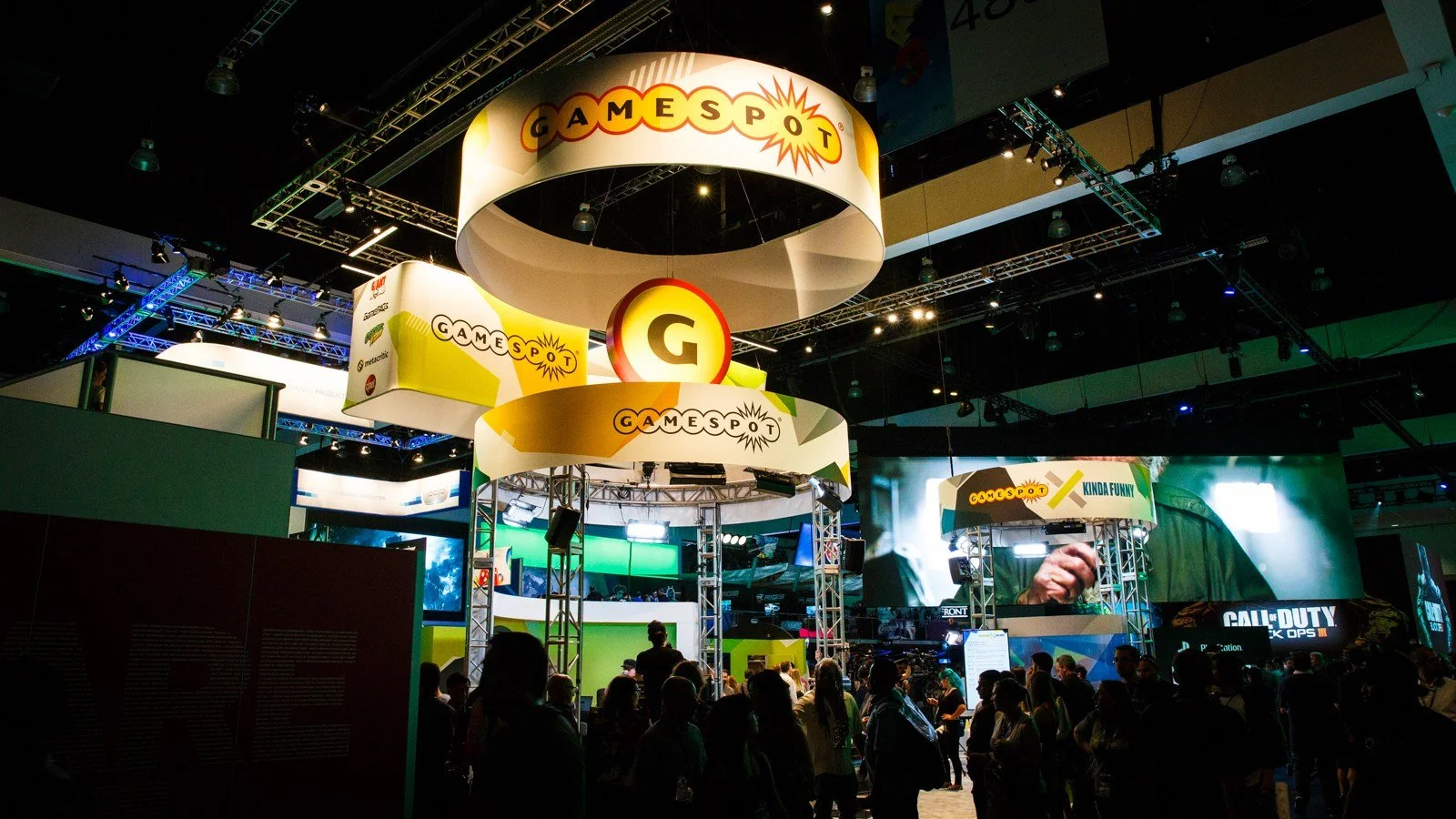
Every June the games industry emptied into the Los Angeles Convention Center and started shouting. Publishers rented theaters. Consoles launched. GameSpot’s job was to be the place all of that news came to get covered, and the booth was the set it got covered on.
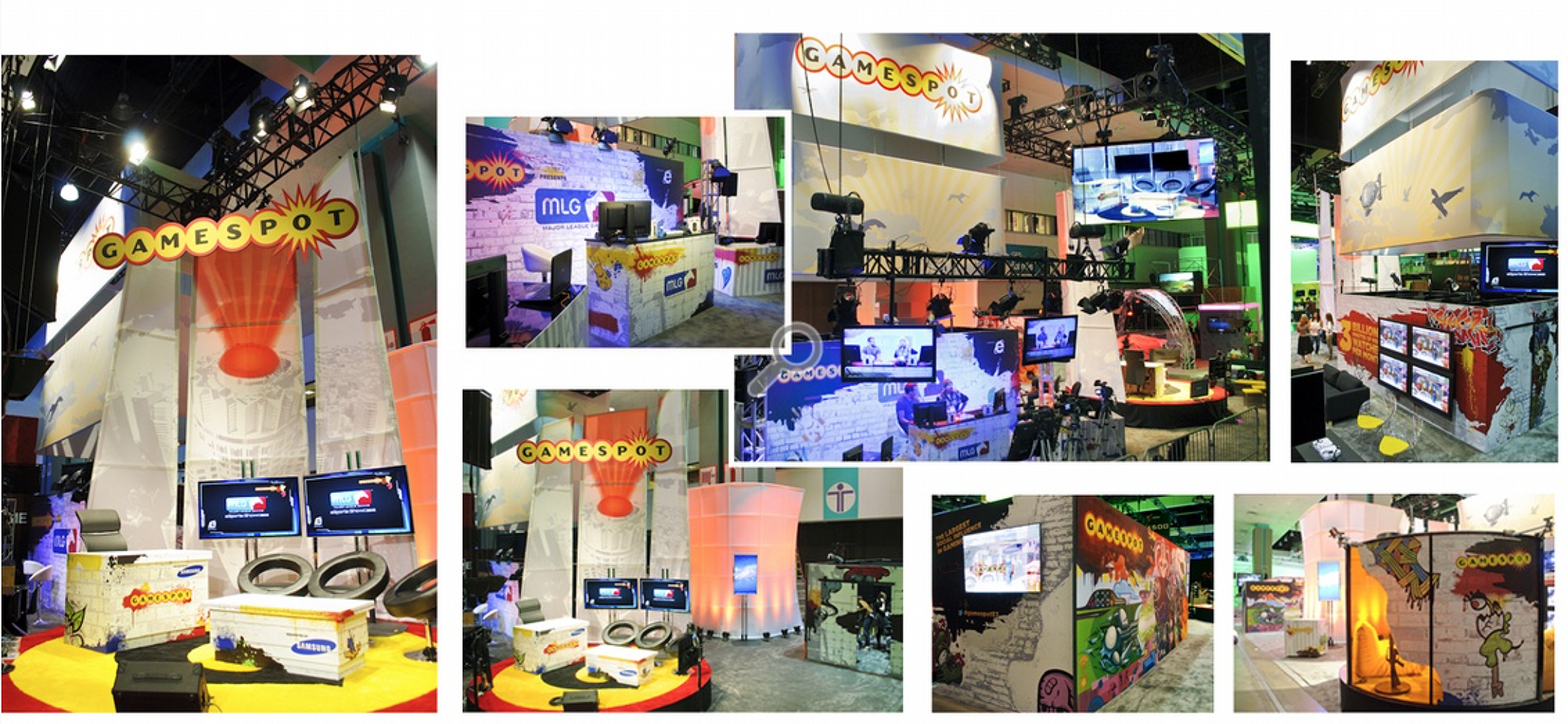
I led creative on it for three years running. Not one piece of it. All of it. The tower you could read from across the hall, the broadcast stages where editors put developers on camera, the graphics moving across the video walls, and every invite, banner, and email that told the industry it was happening before the doors opened.
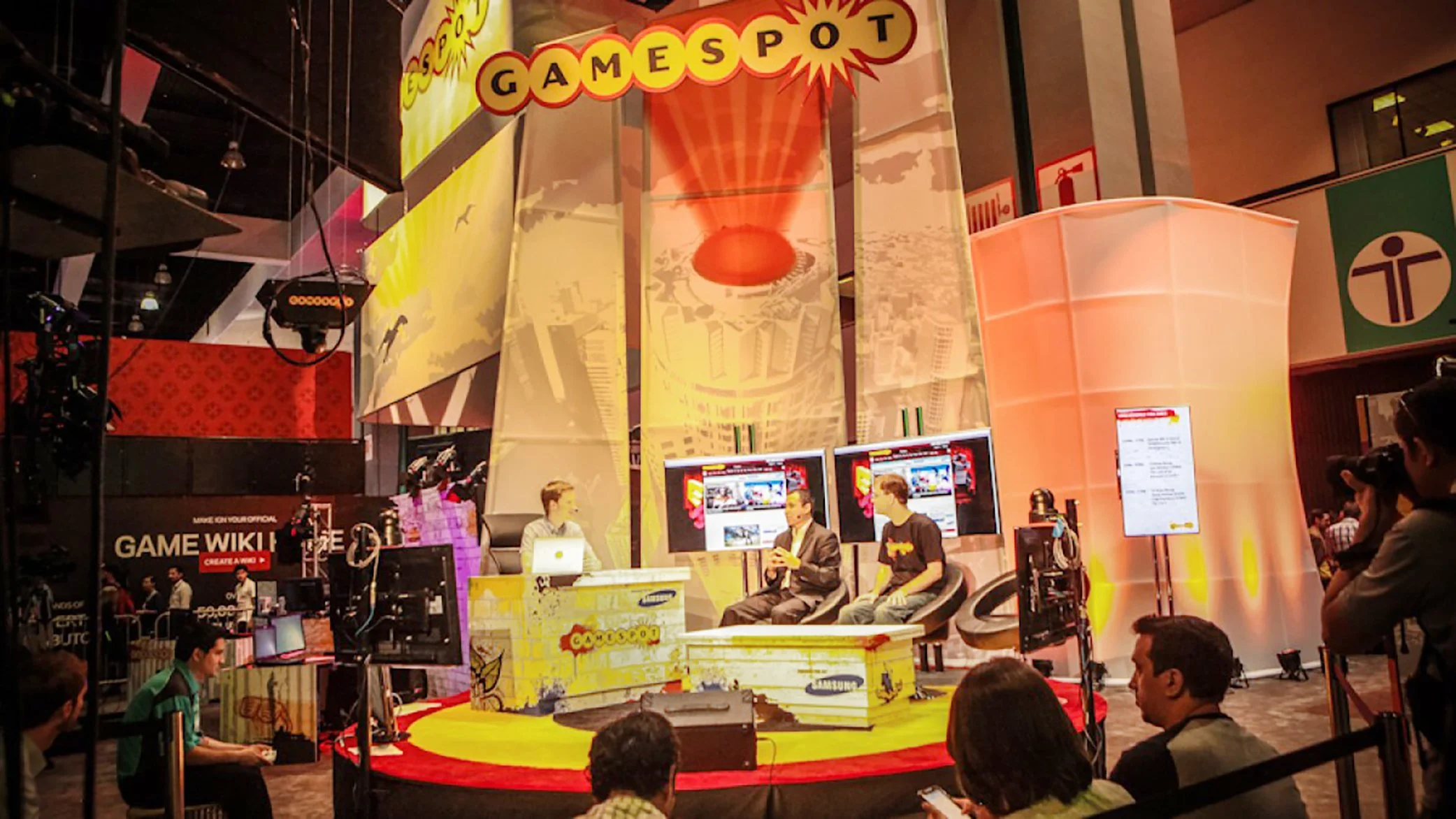
This wasn’t a booth with a couch in it. It was a working television studio dropped onto a trade show floor, live all day, feeding a stream that ran the length of the show while 45,000 people walked past.
The booth
A multi-level structure built to read from across the West Hall. The starburst tower, environmental graphics wrapping the full footprint, and sponsor integration for Samsung and MLG worked into the architecture instead of stapled onto it.
The set
Two on-camera stages designed to shoot clean under stage lighting. Interview desks, host positions, and sightlines planned around the cameras first and the crowd second, because both had to work at once.
ON-AIR Graphics
Screen and video-wall content that carried the GameSpot identity through hours of live coverage. The look on the walls matched the look on the stream matched the look on the tower.
The Campaign
Party invites, event invites, banner ads, and email blasts that pulled press and audience toward the coverage before the doors opened and kept them coming back while the show ran.